Integrated Printing and Logistics Benefits You Should Know
Managing a marketing team often feels like conducting an orchestra while someone keeps handing you new instruments. Files are finalized at 6 p.m., your printing provider needs more time, the logistics vendor wants updated packing notes, and your team is buried in spreadsheets trying to keep everything aligned.
No matter how good your materials are, your campaign is only as strong as the system behind it.
Great creative gets overlooked if print quality isn’t good, while printed posters lose their impact if shipping is delayed. That’s why most businesses are now starting to see the benefits of an integrated printing and logistics provider.
Benefit 1: Faster Turnarounds
Speed is a currency in marketing, and “time-to-market” has become a critical competitive metric. It measures how fast a company can move from concept to customer-ready service or offering. The shorter the timeline, the stronger the brand becomes.
In fact, a study of 652 New Product Development projects found that faster time-to-market was strongly associated with project success. When different vendors handle your printing and logistics, speed becomes nearly impossible.
An integrated partner removes that risk entirely. When all the stages sit under one roof, friction and delays are eliminated, which means:
- Creative materials go straight into production: No need to wait for another vendor’s availability or specs compatibility.
- Issues are caught immediately: It’s easier to spot and fix problems that could affect the packing, labeling, or materials.
- Coordinated shipping timelines: One integrated team makes shipping schedules simple to plan, track, and adjust.
If large format materials are part of your rollouts, it’s worth understanding how production speed and print quality work together. You can explore this further in our Large Format Printing Guide.
Benefit 2: Consistent Branding
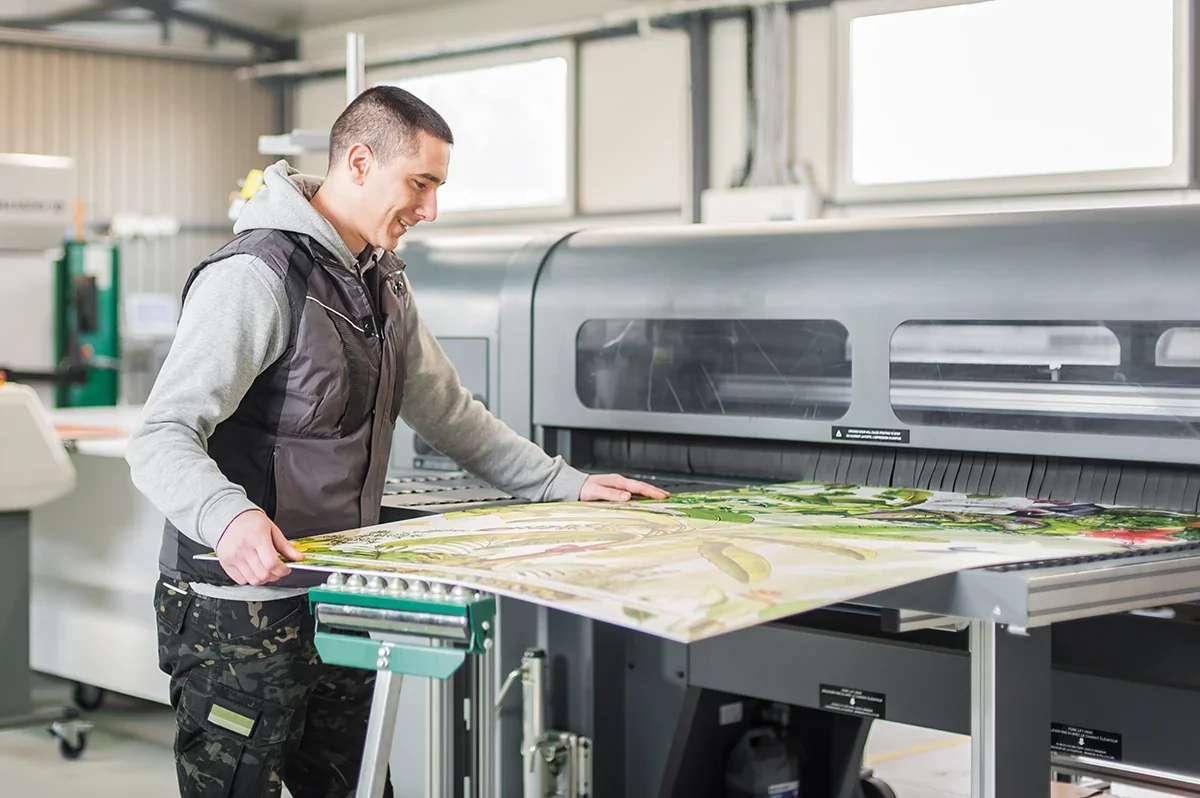
Consumers form an impression of a product within the first 60 seconds of seeing it — up to 90% of that judgment is influenced by color. Even the slightest variation in shade, packaging layout, or labeling can quietly weaken your brand. When customers spot packaging that looks different from what they’re used to, it raises questions and creates doubt. They may wonder if the product has changed or if the brand is slipping in quality. Your business is more prone to these inconsistencies if you’re juggling multiple vendors.
By contrast, teams that rely on one integrated provider for both printing and logistics maintain far tighter control over every detail. It’s the difference between hoping everyone follows the same standards and knowing they do. Working with only one team ensures that the exact shade, finish, and design used in digital files carry through to physical prints. Since they’re also the team that produced your materials, they’ll also know the best way to handle them during inventory, kitting, and shipment.
In this way, your brand looks the same in-store, at events, in influencer kits, or across multiple franchise locations.
Benefit 3: Cost Efficient
One of the biggest expenses in marketing comes from working with too many vendors. Each provider has their own markup, minimums, and timelines. Your team no longer has to deal with all of this if you have a single provider for print and logistics.
You’re not paying extra markups to multiple vendors, you’re not covering double shipping fees, and you’re not wasting budget on fixing mix-ups caused by miscommunication. Everything is produced, stored, packed, and shipped in one place, which cuts out a lot of unnecessary steps.
Benefit 4: Protection for Specialty Materials
For some companies, their marketing materials aren’t just plain prints on paper. Many campaigns rely on specialty pieces that need extra care. Think about foil-stamped boxes that scratch easily or influencer kits with fragile inserts.
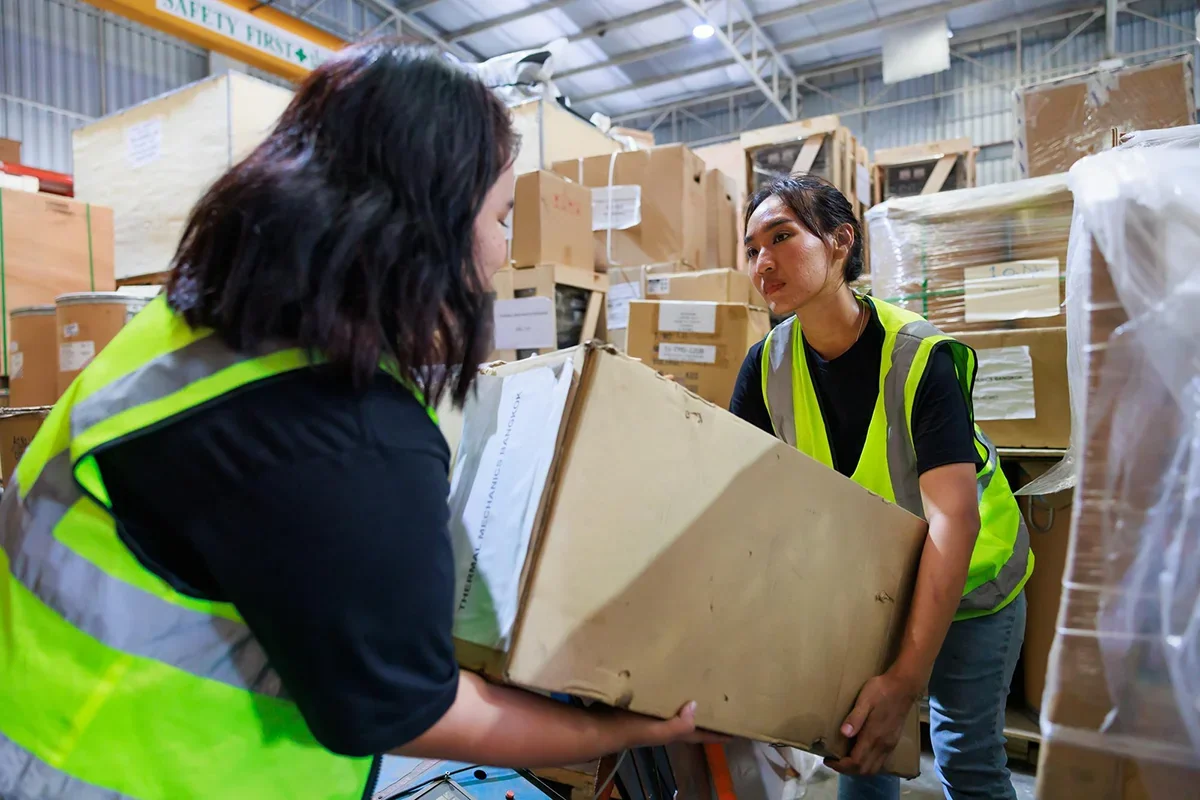
When different vendors handle printing, storage, and shipping, they often don’t understand how fragile each item is or how it was made. That lack of familiarity can lead to scuffed finishes, bent corners, cracked inserts, and kits that arrive looking nothing like what you approved. If you’re already seeing these within your campaigns, you might want to look at signs that you need warehousing and fulfillment services.
With one provider, your materials are handled by the same team that created them. They know the exact finish, weight, and sensitivity of each piece because they worked with it from the start. They know how much pressure a custom box can take, how to pack a laminated sign so it won’t warp, and how to protect UV-coated prints from smudging. That level of understanding dramatically reduces damage, prevents costly reprints, and ensures your materials arrive looking exactly the way you intended.
If you're already experiencing these types of issues, you may be seeing early signs that it's time to upgrade your warehousing and fulfillment processes
Benefit 5: One Invoice, Not Ten
Having multiple vendors means each one sending their own invoice with different terms, formats, and due dates. Just keeping track of who needs to be paid, when, and for what can eat up hours of your team’s time. With one integrated provider, everything is consolidated into a single invoice and a single payment schedule.
From a procurement standpoint, a single provider simplifies vendor management and reduces administrative overhead. From finance’s perspective, it creates cleaner audits, fewer reconciliations, and more predictable budgeting. It also means one point of accountability and clearer visibility into campaign spend.
The Power of A Connected System
The difference between a smoother campaign and a stressful one lies behind the scenes. With integrated printing and logistics, your team has more control, more accuracy, and more breathing room. But the real advantage goes deeper than efficiency — it’s about how a connected system creates a smarter, more proactive operation.
When one provider handles your entire process, they can also notice patterns. They understand how your campaigns cycle throughout the year, which materials tend to run low, which kits require special handling, and where your timelines often tighten. That awareness allows them to anticipate needs before they become problems. They can recommend the right print quantities, adjust production to match demand, and align shipping with launch dates.
This is exactly the type of support Roundhouse provides. Our teams are integrated across creative, printing, warehousing, fulfillment, and logistics, so we see the full picture of your campaign. More brands have been shifting to the same approach too. If you’re exploring similar ways to strengthen your execution, reach out to our team to learn how we can help.
Frequently Asked Questions (FAQs)
-
What does “integrated printing and logistics” actually mean?
It refers to a unified system in which printing, warehousing, kitting, and distribution occur within a single coordinated workflow. This reduces delays, errors, and costs associated with using multiple vendors. -
Does having one provider for print and logistics reduce the risk of damaged or lost materials?
Absolutely. Integrated teams understand how materials were produced and how they should be handled. Fewer handoffs also mean fewer chances for boxes to be mislabeled, lost in transit between vendors, or damaged through improper repacking. -
Is an integrated provider more scalable for growing brands?
Yes. As your campaign volume increases or your business expands into new locations, an integrated provider can scale production, storage, and fulfillment right alongside you. There’s no need to onboard new vendors, juggle multiple timelines, or rebuild processes from scratch.