Postcard Mailing and Management for B2B Campaigns
More businesses are returning to postcards and direct mail as part of their B2B marketing mix. According to USPS reporting, 57.5 billion pieces of marketing mail were sent in 2024 alone, signaling sustained demand for physical outreach. This resurgence puts postcard mailing and management back on the radar for B2B marketers, operations leaders, and campaign managers.
This guide explains postcard mailing and management in clear terms, how it works, when to use it, and what B2B teams should consider to avoid issues.
What Is Postcard Mailing and Management?
Postcard mailing and management is the process of planning, producing, distributing, and tracking postcard-based direct mail campaigns. Since it involves physical marketing materials, it's done in a controlled and repeatable way to ensure accuracy, timing, and cost control.
In B2B, this approach supports teams that need to deliver short yet highly visible messages to a specific audience. Postcards are designed to communicate a single idea quickly and encourage a clear next step without lengthy explanations.
These campaigns are commonly used to:
- Promote upcoming events like trade shows, conferences, webinars, or in-person events.
- Reach out to specific prospects through account-based marketing to introduce a brand or reinforce sales activity.
- Reconnect with prospects who have stopped responding to email or digital outreach.
- Announce updates like new offerings, feature releases, or expanded availability in a concise format.
- Nurture and retain customers through sending thank-you messages, milestone acknowledgments, or renewal reminders to existing clients.
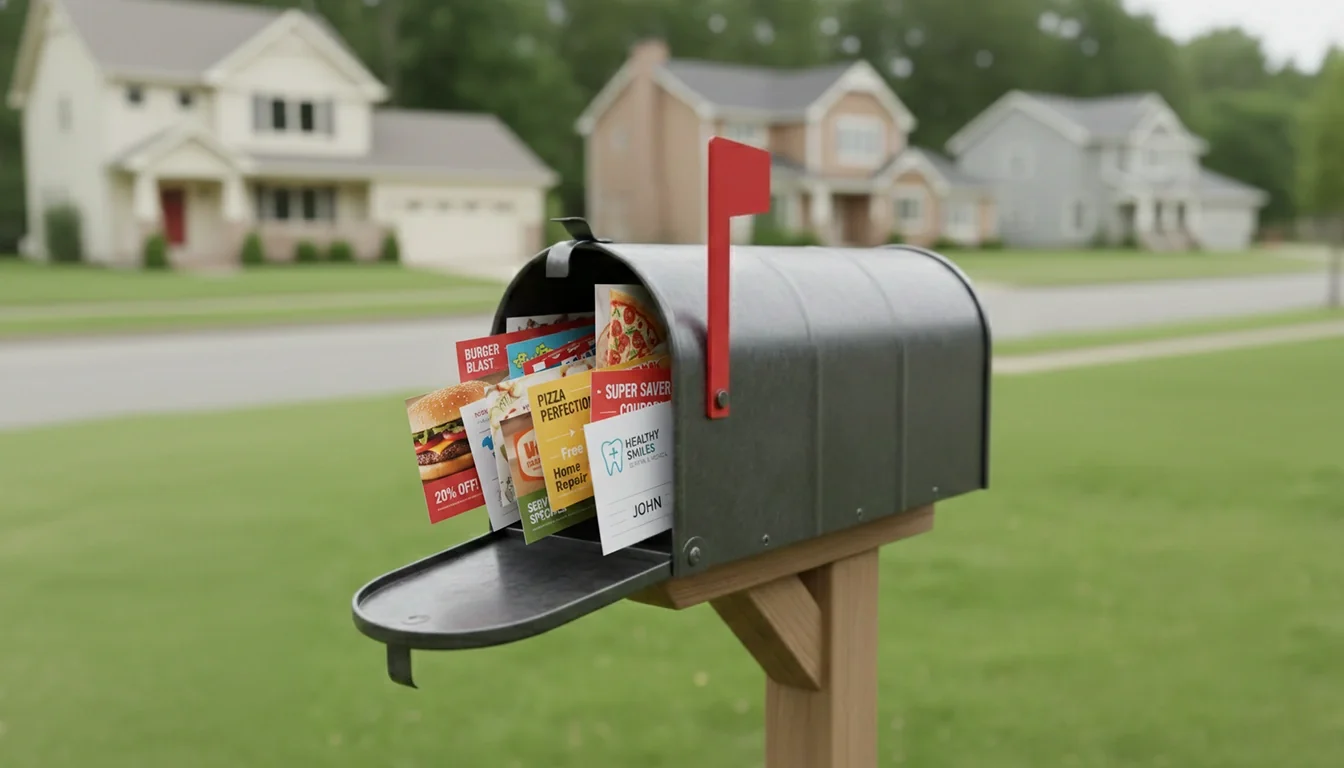
How Does Postcard Mailing Work?
Postcard mailing follows a multi-step process designed to ensure the message is sent at the right time and to the right person. Here are the core stages of sending out postcards:
- Campaign Planning
Every postcard, regardless of whether you're doing it in-house or with an agency, starts with clear planning. This defines the purpose of mailing and establishes standards to follow during execution.
The key elements that should always be part of your planning are:- Campaign goals and success metrics
- Target audience and decision-maker profiles
- Geographic reach and mailing volume
- Budget parameters and delivery timeline
- Design and Production
Planning extends to the postcard designs, which should be developed within postal size and compliance guidelines. An effective postcard typically includes:- Clear and concise headline
- One primary Call-To-Action (CTA)
- Consistent branding and visual hierarchy
- Easy to scan layout
- List Management and Data Handling
Mailing lists are reviewed, cleaned, and formatted before printing begins. This step is critical in B2B campaigns, where bad data leads to wasted spend. For regulated industries, this step may also involve compliance checks. This ensures that data is handled properly and printed materials meet requirements such as HIPAA. - Printing, Mailing, and Tracking
Once approved, postcards are printed and entered into the postal system. Advanced brands may even use tracking methods such as QR codes or campaign-specific URLs.
Are Postcards Effective for B2B Marketing?
Yes, postcards remain effective in B2B because they cut through the digital noise created by thousands of emails and online ads. While more than 81% of brands rely heavily on email, inbox competition makes consistent visibility a challenge.
Direct mail delivers a physical message that reaches the recipient without filters, algorithms, or open-rate dependency. Postcards are seen immediately, read quickly, and do not require an extra action to access the message. They are particularly effective when:
- Used alongside email and sales outreach
- Timed around events or product announcements
- Targeted to specific accounts or decision-makers
However, postcards or direct mail don't replace digital channels. They can strengthen multi-channel campaigns by adding the tangibility advantage to your brand.
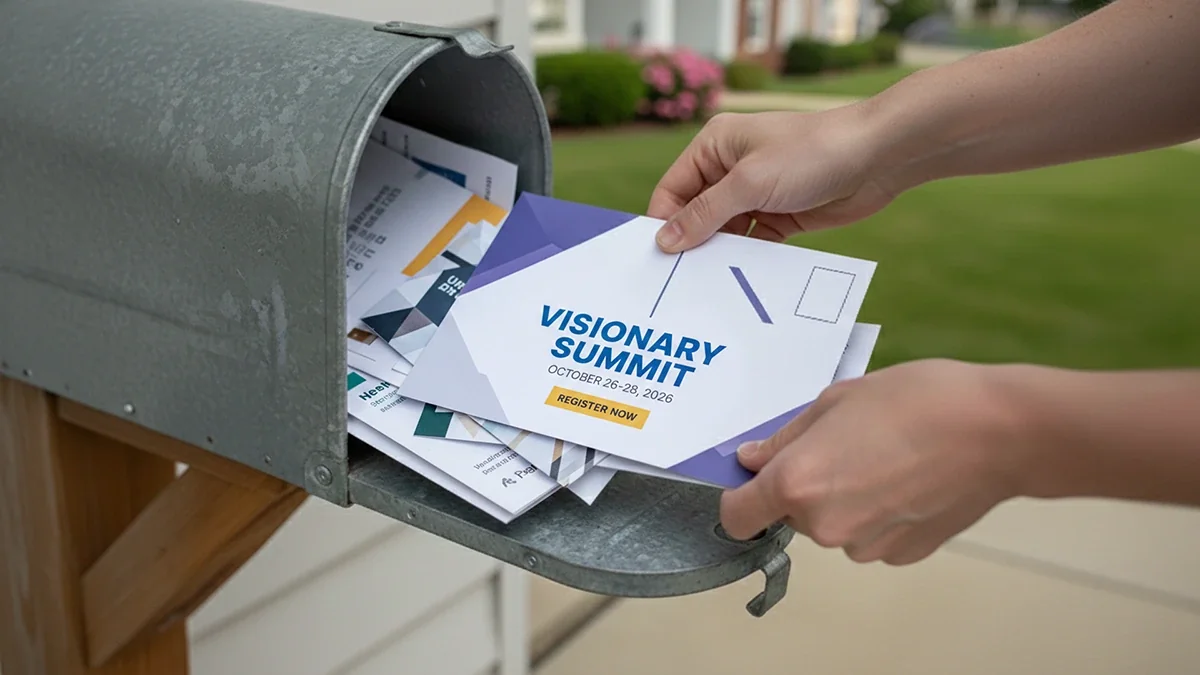
When Should B2B Teams Use Postcard Mailing?
If you're unsure whether postcard mailing fits your campaign, the decision often comes down to how your message needs to be delivered, not how often it's sent. The questions below help determine whether a postcard format aligns with your goals and constraints.
- Do you need your message to be seen quickly?
- Do you have a defined list of best prospects?
- Can your message be understood in a few seconds without additional context?
- Would a visible reminder be more effective than another digital touchpoint?
- Would physical presence increase recall or recognition for this message?
If you answered yes to several of these, postcard mailing is likely a perfect fit. This approach works best when the goal is fast visibility, clear messaging, and predictable delivery.
If you answered no to most of these questions, postcards may not be the most effective option on their own. There's a high possibility that your campaigns require detailed explanation, heavy personalization, or rapid iteration that postcards cannot offer on their own. In these cases, working with an experienced marketing partner is a good start. They can help you determine the right direct mail strategy for your campaigns.
Whether postcard mailing is the right fit or not, the bigger question is execution. Many B2B campaigns struggle not because of the channel chosen, but because creative, production, data, and delivery are handled in isolation.
At Roundhouse, we support B2B teams across the full spectrum of direct mail and marketing execution. Our decades of experience have helped us mold effective processes and strategies in creative and design to printing, direct mail, event support, branded items, warehousing, and fulfillment. This integrated approach allows teams to move from idea to execution without unnecessary handoffs or delays.
If you're evaluating direct mail strategies for your campaign, starting with the right execution partner can make all the difference.
Connect with us and let's explore the right approach for you!